
Four Songs Cost Them $40,000: A Music Licensing Case Study for Venues
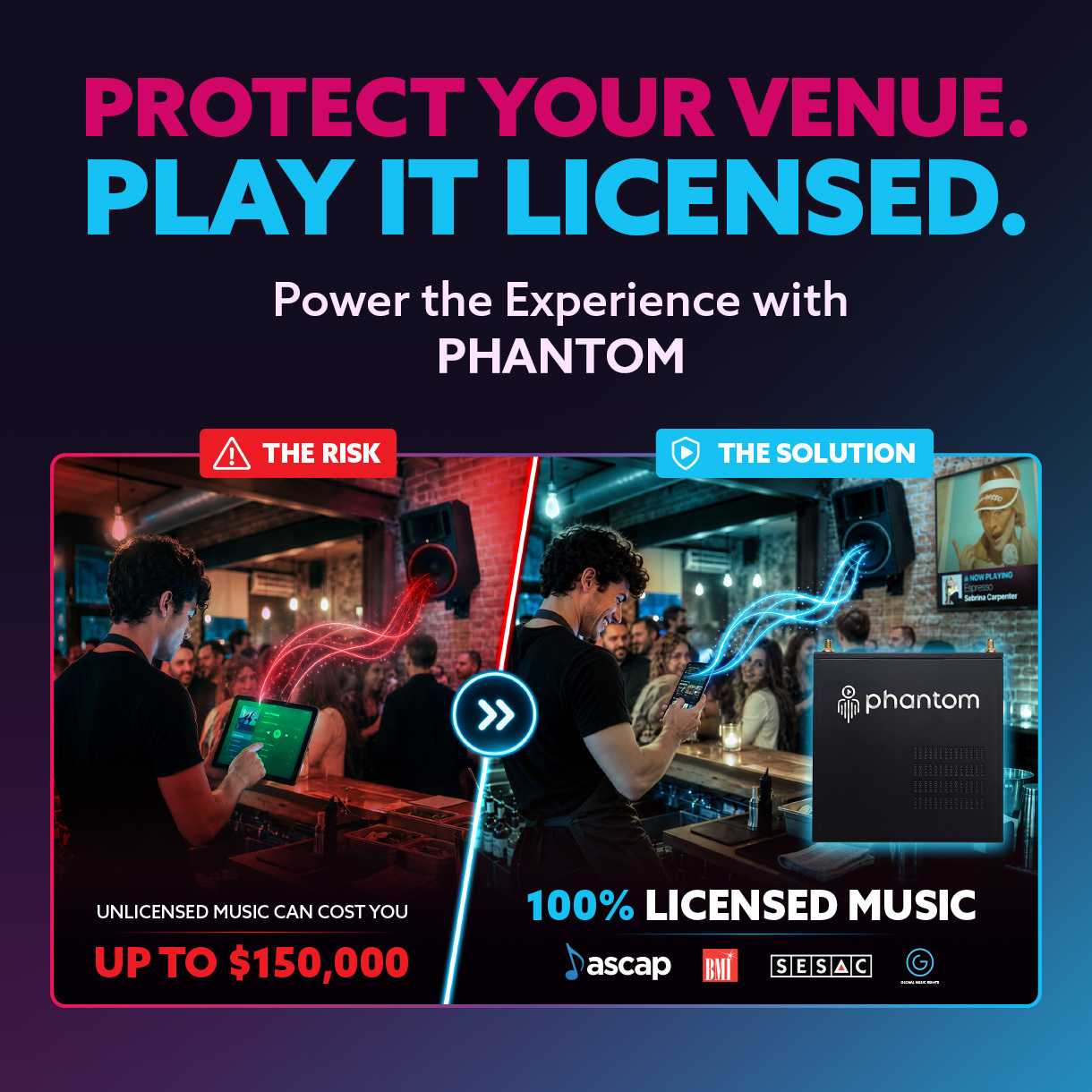
Four unlicensed songs were enough for a federal court to award $40,000 in statutory damages against a Nashville bar. Attorneys’ fees and costs came on top of that judgment. The case is a warning for venues that treat a paid personal streaming subscription as permission to play music for customers. It is not. All AMI music products, including our traditional jukeboxes and the Phantom, give venues a simpler, licensed path for the music played through the product.
The Case: Four Songs at Frisky Frogs
Frisky Frogs continued presenting music without an ASCAP license after repeated notices. An investigator documented four copyrighted songs played through live, piped-in, and DJ music. In 2019, a federal court found the infringement willful and awarded $10,000 per song, plus attorneys’ fees and costs. The court also issued a permanent injunction. The full findings are available in the federal court decision.
Not every licensing mistake produces the same result. But the case shows that even a few documented songs can support a serious claim, especially after warnings are ignored.
Personal Streaming Is Not a Business License
Music played for venue guests is often treated as a public performance. Consumer plans from Spotify and Apple Music generally cover personal, noncommercial use. Connecting an employee’s phone to the house sound system does not change that limit.
Venues may also need to account for music from live bands, DJs, karaoke, television, or other sources. Under 17 U.S.C. § 504, statutory damages generally range from $750 to $30,000 per infringed work and may reach $150,000 per work for willful infringement. These are not automatic fines; a court determines the award in each case.
Enforcement is not limited to large chains. In March 2024, ASCAP announced copyright lawsuits involving 13 bars and restaurants.
Personal Streaming vs. Phantom
Phantom is AMI’s compact, one-pound music and entertainment platform. It connects to one or more TVs, where venues can show music videos, live trivia, now-playing content, and digital ads. Guests use the AMI Play app to choose and pay for songs.
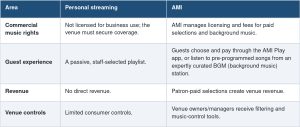
Optional, fully licensed background music can keep audio playing between paid selections. Phantom’s licensing coverage applies only to music played through Phantom; it does not cover live bands, DJs, karaoke, television, personal streaming, or other sources. A local AMI operator handles setup, service, and support.
A Practical Music Check for Venue Owners
If your venue plays music, answer these questions:
- What devices and services supply music during every part of the week?
- Are any employees using personal streaming accounts?
- Which public-performance rights are covered for each source?
- Who manages renewals, fees, records, and license questions?
If the answers are unclear, the risk is unclear too. Do not wait for a demand letter to map your music setup.
Turn Music from a Risk into an Opportunity
Music should add energy to a venue, not a licensing burden. Phantom combines licensed music for its playback with guest choice, venue controls, entertainment features, and patron-paid revenue potential. To move away from personal streaming and toward a solution designed for business, request more information.
Frequently Asked Questions About Music Licensing
Can a bar use a personal Spotify or Apple Music account?
Personal plans are generally limited to personal, noncommercial use. They do not normally include the public-performance rights needed for customer-facing playback.
Do AMI jukeboxes cover live music, DJs, or karaoke?
No. AMI’s coverage is limited to music played through Phantom and other AMI music products. Other non-AMI music sources may require separate licenses.
How much can unlicensed music cost?
Federal statutory damages generally range from $750 to $30,000 per infringed work and may reach $150,000 per work for willful infringement. Outcomes depend on the facts of each case.